




Solo Developer
Unreal Engine 5
FPS / Tower Defense
PC
In Progress (2026)
Protect the Core. Survive the Waves.
Poly Defense is an ambitious solo project combining the strategic planning of Tower Defense with the engaging action of a First-Person Shooter. Set in a Sci-Fi universe involving dimensional travel, players must secure giant Cores while surviving against relentless waves of enemies.
This project was created using Unreal Engine 5 as a way to learn the engine, and create systems that I had not worked with before. From engineering complex AI behaviors to balancing resource economies and hybrid game loops, I am building every system entirely from scratch to challenge myself to learn how to create complex systems while creating an engaging experience.
Core Mechanics
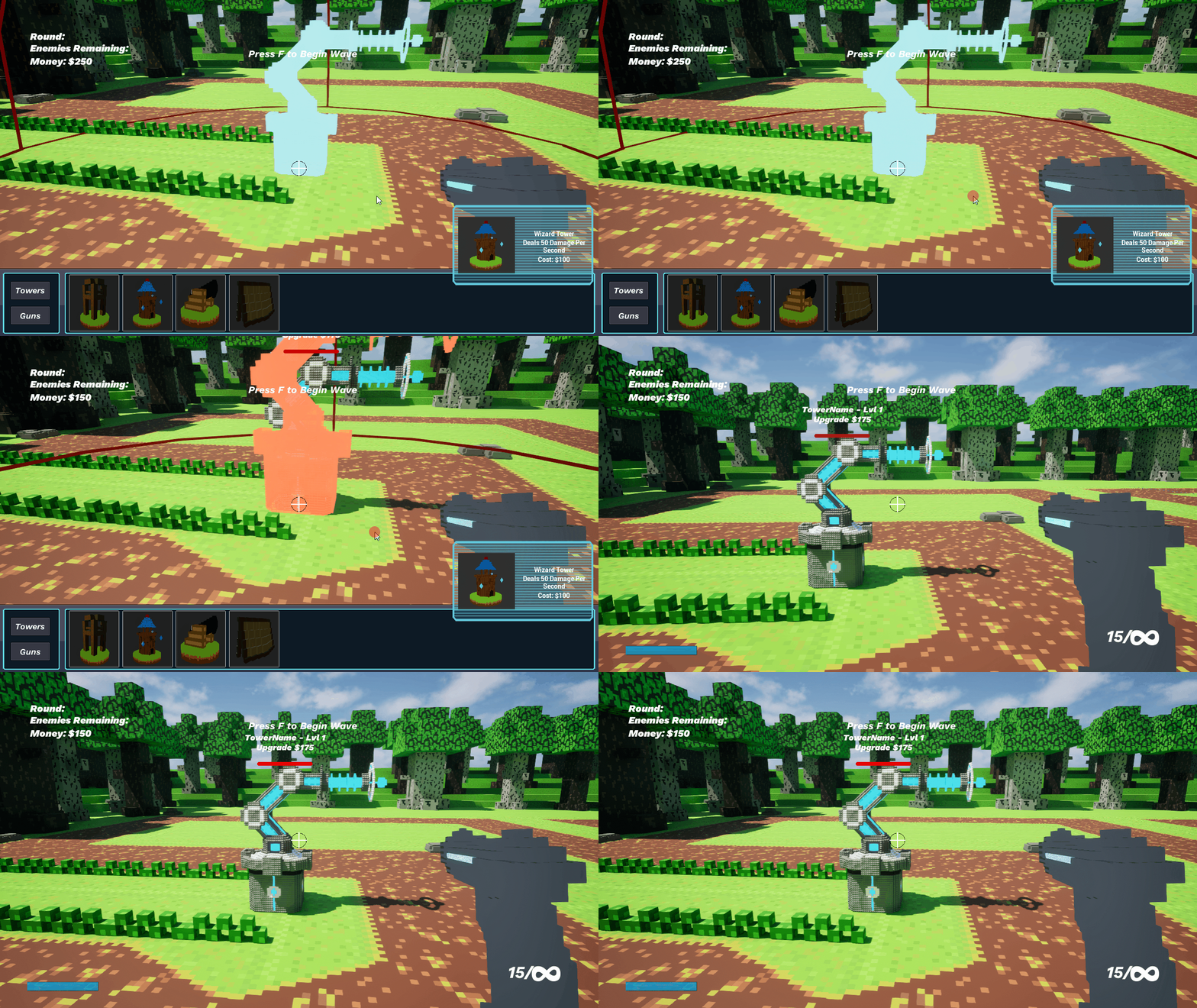
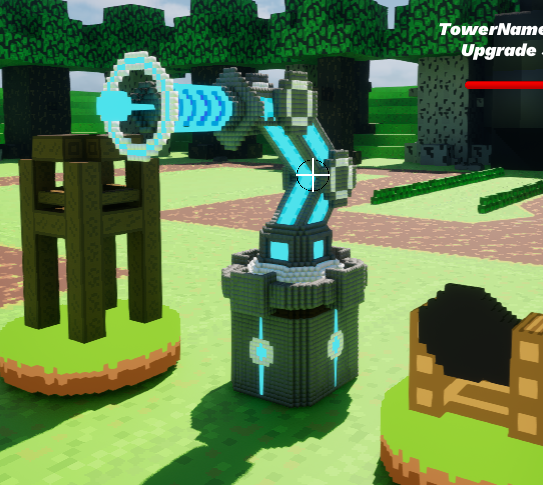
Tower Placement
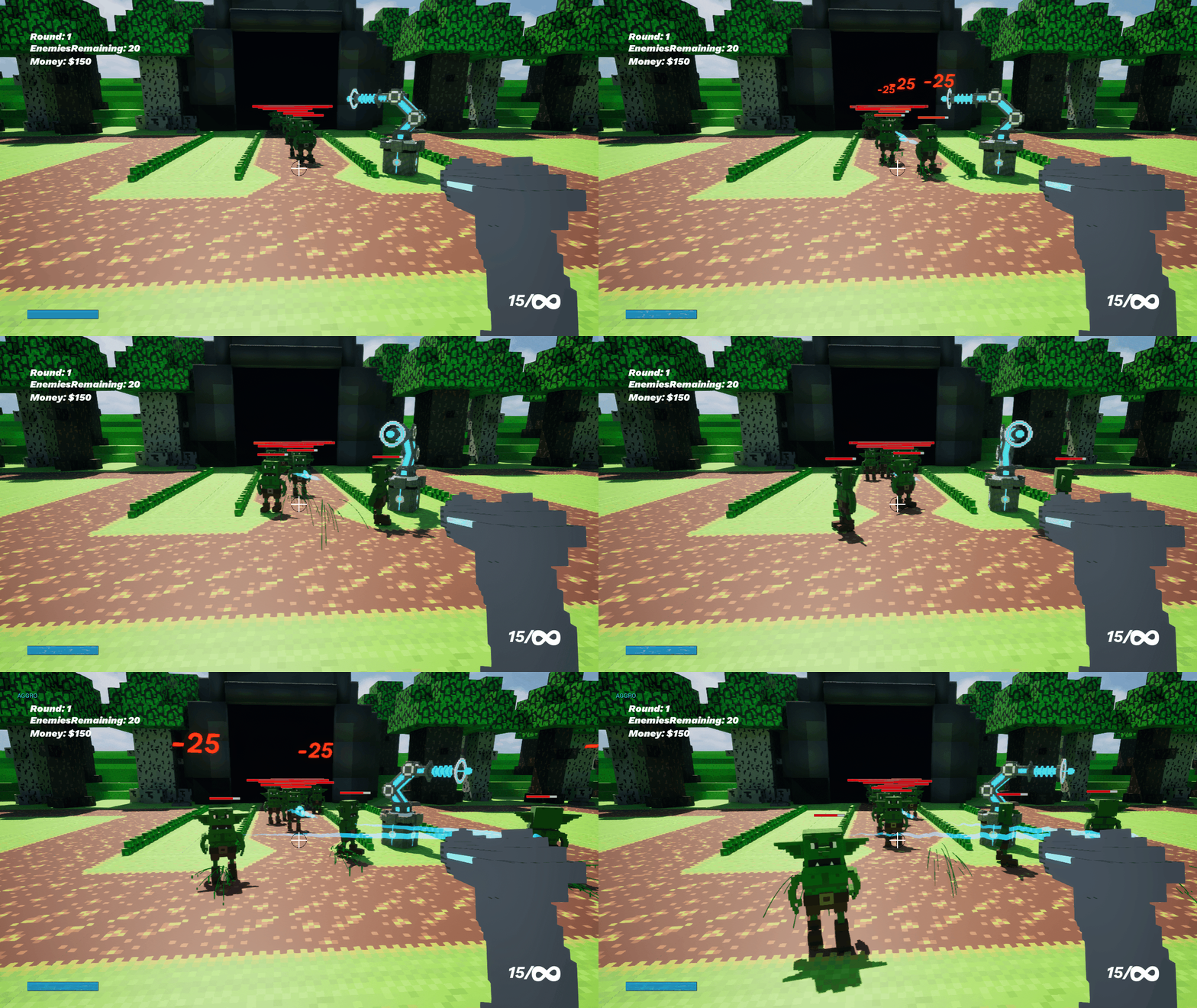
Automated Defense
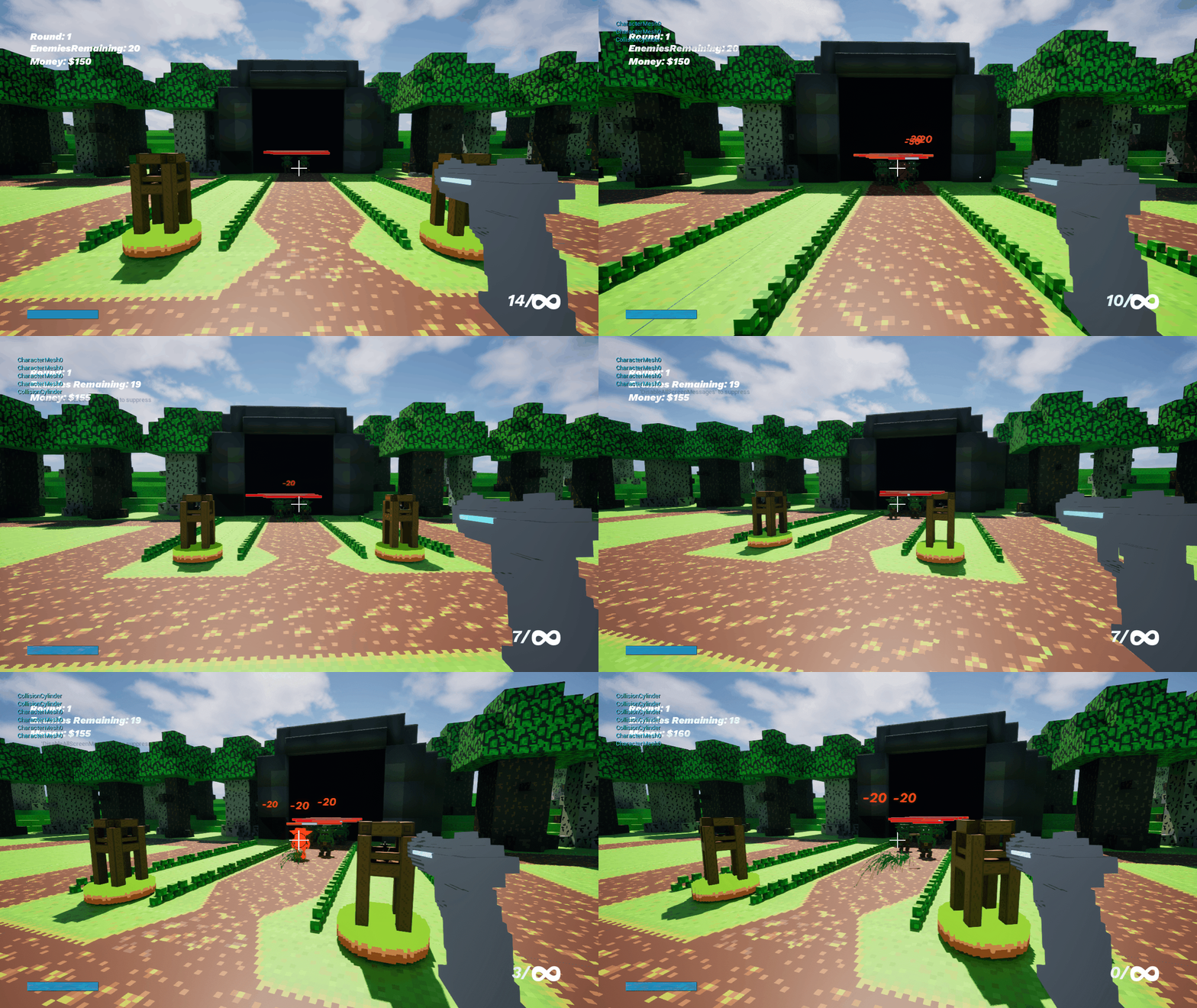
FPS Gunplay
Technical Design Deep Dives
01. Enemy AI & Pathing
ProblemEnemies navigating a complex TD environment were getting stuck on walls using standard navmesh seeking. When moved to strict spline-based pathing, they felt too robotic, and applying damage on event tick made combat feel unfair.
Solution & ReasoningEngineered a hybrid navigation system. Splines handle navigation toward the Core, while a custom Blackboard and Behavior Tree allow enemies to break free from the spline to attack the player. Tying damage to attack animations rather than event ticks made combat more readable and fair.
What I LearnedIteration is crucial for game feel. Solving a technical pathing issue with splines created a design issue (robotic movement), which then required a behavioral solution to make the enemies feel alive and more engaging to fight.
02. Object-Oriented Towers
ProblemDeveloping multiple tower types with unique behaviors (single-target, AoE, multi-hit) without creating messy, redundant code or convoluted targeting logic.
Solution & ReasoningDesigned a parent-child class hierarchy. The parent handles core placement logic (valid/invalid zones) and basic targeting. Child classes uniquely handle projectile logic (destroying arrows, multi-hit zaps). This allows for rapid prototyping and seamless addition of new towers without rebuilding foundational systems.
What I LearnedBuilding a highly modular foundation early on has saved me countless hours when balancing, allowing me to focus on how projectiles feel rather than how the tower detects enemies.

03. UI/UX Iteration
ProblemThe dual-nature of a TD/FPS requires fast access to building tools and weapons. Initial UI designs (split left/right screens) were visually cluttered and ineffective during fast-paced gameplay.
Solution & ReasoningConsolidated the UI into a unified tab at the bottom of the screen. (Currently prototyping a radial wheel menu). Screen real estate is premium in an FPS; centralizing the build menu reduces eye-travel, keeping the player focused on the action while accessing tactical options.
What I LearnedUI in a hybrid game has to be effective for both of the genres without conflicting each other. It must work with the interactions in the game rather than detract from one to improve another.
Milestones & Documentation
Latest Update
Showcasing the latest iterations of the defense loop, UI, and gunplay.
Early Prototype
An early look at blockout testing and initial core mechanics.
Advanced Seminar Doc
The original design document outlining the mechanics, scope, and vision for the game.
Want to test your defenses?
Download Latest BuildWhat's Next?
Future updates will focus on introducing new enemy variants (including flying units!), balancing the in-game economy, and making the environments more dynamic. Check back soon for more updates!